Neue Klasse, neue Rollen
Wie soziale Identität den Schulstart prägt – und wie Pädagog:innen darauf reagieren können
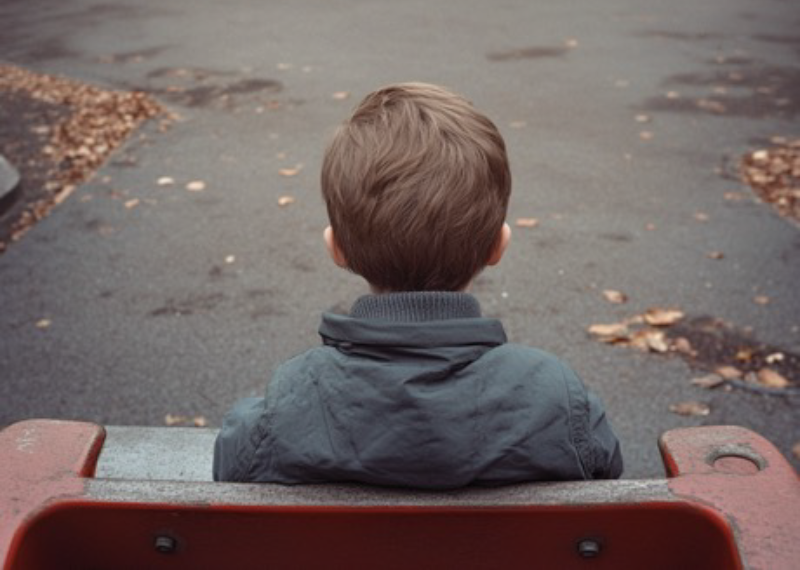

Social Identity: A Theoretical Lens for Everyday School Life
Social Identity: A Theoretical Lens for Everyday School Life.
The theory of social identity (Henri Tajfel, John Turner) demonstrates how our self-image arises from our group affiliations. We define ourselves largely by which social groups we consider part of our identity—for example, as a soccer player, as someone from a council estate, or as someone with a migration background. Everyone belongs to several groups simultaneously, and it is precisely this network of affiliations that shapes social identity.
These affiliations also influence how others see and treat us—whether consciously or unconsciously. Informal role assignments emerge as early as the first days of school, shaping the rest of the school year, often more persistently than we would like. Students quickly recognize similarities and differences. Who looks "different," who behaves "differently"? Who has an "embarrassing" hobby or an expensive sense of style?
Tajfel and Turner demonstrated these effects in their minimal group experiments, which illustrate how people form different groups based on the smallest differences. In these experiments, students were divided into groups according to arbitrary criteria (Klee group or Kandinsky group). Although no real differences existed between the groups, the students spontaneously favored members of their own group over the other group when performing a task. This tendency toward ingroup bias demonstrates how strongly preconceived group affiliations can influence our behavior. For everyday school life, this means that children and teenagers notice, for example, who wears the same clothes, uses the same emoji language, or gets along well with certain teachers—and these categories influence their interactions. It
is important to note that group affiliations are not inherently negative. They foster identity and a sense of community. For example, it can be beneficial for a student with refugee experience to connect with others in similar situations. At the same time, group labels also carry risks: If they are linked to value judgments (eg, "the athletic ones" vs. "the weak ones"), hierarchies, prejudices, and tensions between the ingroup and the outgroup can easily arise. Teachers should therefore keep a watchful eye on the informal groups and roles that form in the classroom from the very beginning. By developing an understanding of this early on, they can counteract any exclusionary tendencies and take targeted measures to strengthen class cohesion across groups.
Social roles as a space for development
Social Roles as a Space for Development:
Problems arise when assigned roles ("the class clown, the overachiever") become rigid categories. Children and adolescents then feel pressured by expectations that can limit their personal development. Here, unspoken labels are particularly insidious: often, students aren't explicitly labeled, but everyone implicitly knows who, for example, is considered "underachieving" or who "is always disruptive." Such labels can take on a life of their own and become self-fulfilling prophecies.
Therefore, school should be a place that constantly challenges such role attributions. In practical terms, this means creating spaces where students can rediscover themselves. Changing group assignments, projects, and elective subjects allow them to break from rigid patterns. It's also important to define success in various ways: not only academic achievements, but also social, artistic, or practical skills deserve recognition.
Today's school classes are usually heterogeneous. Different cultural backgrounds, languages, and life experiences converge. In the 2022/23 school year in Austria, 19.3% of students held a foreign nationality, and 27% spoke a language other than German at home (Vienna: 39.9% and 51.6%, respectively). (Source: Austrian Integration Fund). This diversity is both an enrichment and a challenge, requiring active promotion of a sense of belonging across differences. Every student should feel they belong – regardless of origin, appearance, academic performance, or other characteristics. Social psychology emphasizes the importance of the needs for self-esteem (“I am good enough”) and belonging (“I belong”). If a student believes, “The others think I don't fit in,” their self-esteem is undermined. To break down such dysfunctional beliefs, it helps to encourage students to reflect on their own strengths and diverse identities. By recognizing the many facets of their being (perhaps an athlete, a gamer, and so on), children and young people develop a more positive self-image. In this way, social identity is not pigeonholed, but becomes a space in which young people can unfold and develop.
Practical impulses for a strong class identity
The first few weeks in a new class are a special phase – much is still open, much is just beginning to develop. We would like to encourage teachers to consciously use this time: Small initiatives can foster positive interactions right from the start.
• Define shared values and rules: Right at the beginning of the school year, basic classroom rules and values should be developed in dialogue with the students. When everyone can participate in deciding on the rules of conduct, identification with the class increases. A jointly created "class credo" or poster with the agreed-upon values can be displayed in the classroom.
• Actively shape relationships – instead of letting them "develop": Active icebreaker games help with initial introductions. During the first few days, exercises are recommended in which students get to know each other personally and discover commonalities – for example, a bingo game where everyone has to find someone who has the same hobby or favorite food. It is important to also address and communicate differences: In this class, diverse backgrounds and interests are normal. By emphasizing commonalities and respecting differences early on, empathy and an initial sense of belonging develop.
• Utilize diversity as a resource: Differences in language, background, or everyday experiences should be openly addressed in the classroom – not idealized, but as part of reality. A simple exercise: The class collects on a poster or digitally what each student brings to the table – languages, hobbies, special experiences. This makes it clear: Diversity is present, it is seen – and it affects us all.
• Rotating groups and roles: Group processes can quickly become entrenched – often to the detriment of individuals. Counteracting this early on promotes openness: Regularly mix up seating arrangements, partner work, or project teams – this helps students learn to cooperate with many others. It helps to consciously rotate roles: Sometimes a more reserved student takes on the role of moderator, sometimes the more vocal student handles the organizational work. This opens up possibilities and strengthens social learning.
• Create shared experiences and rituals: Nothing connects students more than shared experiences. Plan activities early on where everyone experiences something together as a class: a class project, a short field trip, or a team challenge during class. A shared goal – like decorating the classroom – strengthens the feeling: “We can do this together.” Simple rituals also foster a sense of unity: a shared start to the day, a class motto, or a song. Such repetitions provide structure, strengthen identity (also between teachers and students) – and make the difference between “having a class” and “being a class.”
• Getting to know different worlds: To foster empathy and a change of perspective, it helps to step into other roles. Give students short biographies of very different people – for example, with different backgrounds, interests, or challenges. In small groups, they then share their stories in the first person: "My name is Sara, I'm 13, and I grew up bilingual..." Afterwards, the class discusses: How does it feel to belong to a particular group – or not to belong? What roles might have been assigned to the character – and why?
• Encouraging reflection on one's own identity: Those who only see themselves as "the shy one" or "the sporty one" are quickly assigned a narrow role. Exercises in self-awareness open up new perspectives: Have students, for example, write an "I am..." list (eg, older brother, Viennese, hobby coder, animal lover). During the presentations, it becomes clear: Every person has many facets. This creates more understanding for one another – and less reduction to superficialities or prejudices.